

Table of Contents
- How to Spot Quality Fashion Accessories at a Glance
- Inspect Stitching and Seam Construction
- How to Tell If a Handbag Is Good Quality
- How to Identify Genuine Leather vs Faux Leather
- Evaluate Hardware and Metal Components
- How to Maintain Fashion Accessories for Longevity
- Sustainable vs Fast Fashion: What the Markers Tell You
- Frequently Asked Questions
Last Updated: September 30, 2026
How to Spot Quality Fashion Accessories at a Glance
Quality fashion accessories separate themselves through meticulous construction, premium materials, and thoughtful design details. The global fashion accessories market is projected to grow from USD 1,214.19 billion in 2026 to USD 2,233.47 billion by 2033, according to Fortune Business Insights Fashion Accessories Market Report, driven partly by consumers becoming increasingly discerning about what they buy. At Prime Picks, we help busy moms and everyday shoppers spot quality fashion accessories that stand the test of time rather than fall apart after a season.
The difference between a handbag that lasts five years and one that falls apart in five months comes down to specifics: how tight the stitching is, whether the leather is genuine, what metal hardware is used, and how well the item is finished inside and out. Most shoppers focus on brand name or price tag alone, missing the actual markers of durability. Look for signs of wear on display items, snags, premature peeling, or bubbling on fabric usually signal poor quality materials or construction, according to NPR Fashion Expert Guide.
Below, we'll show you exactly how to spot quality fashion accessories by examining stitching, materials, hardware, and construction details that separate investment pieces from fast fashion throwaway items.
Inspect Stitching and Seam Construction
The stitching on quality fashion accessories is tight, even, and consistent throughout. Stitching density, the number of stitches per inch, matters tremendously. High-quality pieces typically have 8-12 stitches per inch, while cheaper items may have only 4-6. Run your finger along the seams: they should feel smooth, with no loose threads or gaps between stitches.
Check for topstitching on visible seams. Topstitching (decorative stitching on the outside) should be perfectly straight and evenly spaced. If it wavers or skips, the manufacturer cut corners during production. Look at the seam allowance, the fabric between the stitching line and the raw edge. Wider seam allowances (half an inch or more) indicate a garment built to last, while narrow allowances suggest the piece was rushed.
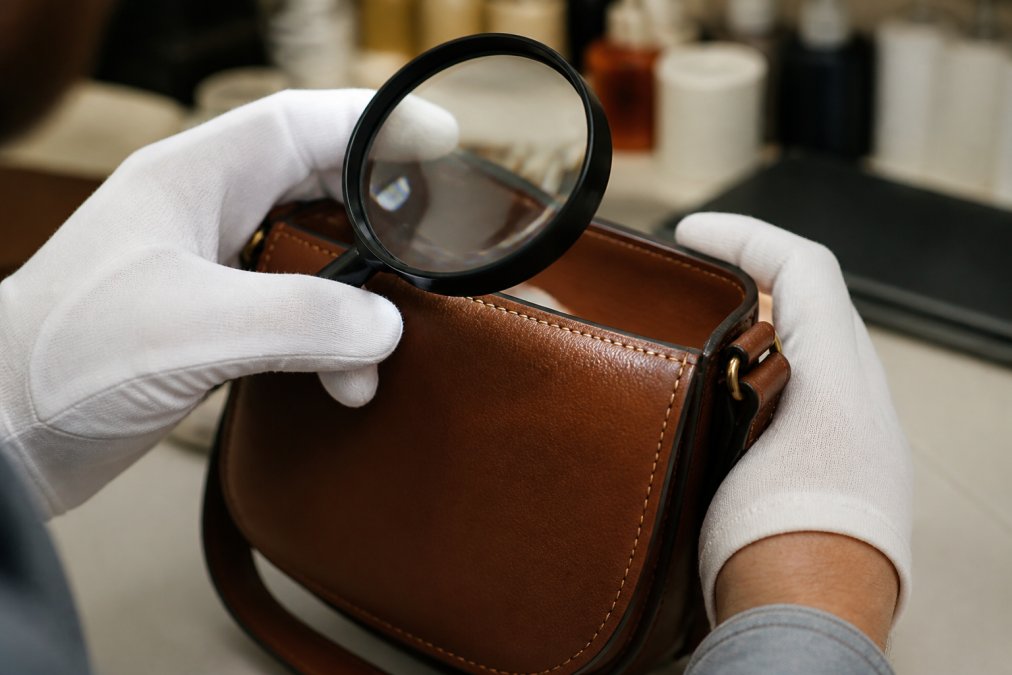
Quality accessories use overlock stitching on interior seams to prevent fraying. This specialized stitch wraps around the edge of the fabric, locking it in place. If you see raw, unfinished edges inside a bag or on a clutch, that's a red flag.
Thread color matters too. Cheap manufacturers use thread that doesn't match the fabric, making stitches visible from a distance. Quality pieces use thread that blends seamlessly, showing only the stitch line itself. Examine the inside of the bag or accessory: interior stitching should be just as neat as exterior work.
How to Tell If a Handbag Is Good Quality
A quality handbag holds its shape, distributes weight evenly, and shows careful attention to every detail from exterior to lining. The best handbags combine sturdy construction with thoughtful design that makes them functional for daily use.
Start by examining the exterior material and how it's attached. Quality leather or synthetic materials should be uniformly colored with consistent texture throughout. Run your hand across the surface, it should feel smooth and substantial, not thin or papery. Check how the material is adhered to the bag's frame. On quality pieces, the material is glued and stitched to the frame, creating a bond that won't separate with use.
The lining construction reveals a lot about a handbag's quality. Open the bag and inspect the interior fabric. Quality linings are made from durable materials like cotton or polyester blends, not thin synthetic fabrics that tear easily. The lining should be fully attached to the bag's interior, not just glued at seams. Look for interior pockets and how they're constructed, they should be securely stitched, not just glued.
Weight is a practical indicator. Quality handbags feel substantial but not unnecessarily heavy. Pick up the bag and feel how it distributes weight across your shoulder or hand. Poorly constructed bags feel awkward or unbalanced. The handles should feel sturdy and not flex excessively when you hold the bag.
Prime Picks carries handbags like the Women's Purse and Handbag 3Pcs Bag Set ($175.42), which features well-made synthetic leather with smooth, even stitching and anti-scratch, tear-resistant material. This three-piece set demonstrates how quality construction allows one purchase to serve multiple occasions.

How to Identify Genuine Leather vs Faux Leather
Genuine leather and high-quality faux leather can both produce excellent accessories, but they require different inspection approaches. The key is knowing what to look for in each material.
Genuine leather has a distinctive hand-feel. Real leather is warm to the touch and slightly flexible, molding to your hand as you hold it. Faux leather often feels cold and plastic-like initially. Smell the material, genuine leather has a natural, slightly earthy scent (though tannery chemicals can mask this). Faux leather typically smells synthetic or plastic-like.
Womens Purse And Handbag 3Pcs Bag Set →
Examine the surface closely. Genuine leather shows natural variations in grain and color, with slight imperfections that prove authenticity. The grain pattern should be irregular and organic-looking. Faux leather often has a uniform, repetitive grain pattern that looks printed rather than natural. Look at the edge of the material, genuine leather shows a natural edge that's the same color throughout. Faux leather edges often reveal a synthetic backing.
Test water resistance. Place a drop of water on genuine leather, it beads up and sits on the surface. On faux leather, water often absorbs immediately or sits without beading. This difference reflects the material's porosity and breathability.
Check the care label and product description. Quality faux leather is labeled as "PU leather" or "polyurethane," not vague terms like "synthetic" or "vegan leather." The Evening Bags with Exquisite Texture ($125.50) uses quality materials.

Price and brand reputation matter less than material verification. Even expensive brands sometimes use poor-quality faux leather, while some affordable pieces use excellent synthetic materials. Verify the material yourself rather than assuming price indicates quality.
Evaluate Hardware and Metal Components
Hardware, zippers, buttons, clasps, and metal accents, separates quality accessories from cheap ones. Poor hardware fails first, making an otherwise decent piece unusable.
Examine zipper quality by looking at the slider and teeth. Quality zippers have metal or high-grade plastic sliders that move smoothly without catching. The teeth should be evenly spaced and aligned. Open and close the zipper several times, it should glide smoothly without resistance or wobbling. Cheap zippers stick, catch fabric, or separate from the track after minimal use. Check the zipper pull, it should be securely attached and not wobble.
Metal hardware like clasps, D-rings, and buckles should feel substantial and smooth. Pick up the accessory and gently test the clasp mechanism, it should open and close with a satisfying click, not a flimsy snap. Look at the metal finish. Quality hardware has even plating without discoloration, scratches, or exposed base metal. Run your finger across metal accents, they should be smooth without rough edges or burrs.
Button quality matters on structured bags and clutches. Quality buttons are securely attached with reinforced stitching on the back. Wiggle the button gently, it shouldn't move or feel loose.
How to Maintain Fashion Accessories for Longevity
Quality accessories deserve proper care to maximize their lifespan. Maintenance practices determine whether an investment piece lasts years or deteriorates quickly.
Sustainable vs Fast Fashion: What the Markers Tell You
The fashion industry is shifting toward transparency and traceability. According to Strategy& (PwC) Fashion Retail Outlook, traceability and transparency are key trends for fashion retailers in 2026, reflecting consumer demand for ethical production and quality craftsmanship.
| Marker | Sustainable/Quality | Fast Fashion |
|---|---|---|
| Stitching | 8-12 stitches per inch, even and tight | 4-6 stitches per inch, irregular |
| Seam Allowance | Wide (½ inch+) | Narrow (¼ inch or less) |
| Hardware | Substantial, secure attachment | Flimsy, loose attachment |
| Interior Finish | Fully lined, reinforced pockets | Minimal lining, glued pockets |
| Material | Named fiber content, natural or high-grade synthetic | Vague labeling, low-grade synthetics |
| Care Instructions | Detailed, specific guidance | Minimal or generic instructions |
| Repairability | Designed for repair, reinforced stress points | Not designed for repair, single-layer construction |
Frequently Asked Questions
How do I know if a fashion accessory's stitching is high quality?
Look for even spacing between stitches with no gaps or loose threads. High-quality accessories have stitching density that creates a tight, secure seam. Check that stitches run smoothly in straight lines without puckering. Overlock stitching on edges and topstitching on visible seams indicate durability. If seams feel loose or stitches are spaced far apart, the accessory will likely fail quickly. Run your finger along the seam, quality construction feels smooth and secure, not rough or separating.
What are the key indicators of high-quality hardware on handbags?
Examine clasps, zippers, and metal accents for smooth operation and solid weight. Quality hardware should feel substantial and move without catching or grinding. Check metal plating for consistency, genuine gold or silver plating appears uniform without discoloration or peeling. Zippers should glide smoothly without sticking. Metal components should have clean edges and secure attachment points. Poor-quality hardware tarnishes quickly, sticks, or breaks easily. Test clasps and closures multiple times to ensure they function reliably and won't fail during regular use.
How can I tell if leather accessories are genuine or synthetic?
Genuine leather has a distinct hand-feel, soft, flexible, and slightly warm to the touch. It develops a natural patina over time and has visible grain patterns that vary across the surface. Synthetic leather feels plastic-like, stays cool, and has uniform, repetitive grain patterns. Check the back or underside of the accessory; genuine leather shows natural texture and color variation, while faux leather appears consistent. Smell the item, real leather has a subtle, earthy scent, while synthetic materials often smell chemical or plastic-like. Read the care label; genuine leather requires specific maintenance, while synthetics need simpler care.
Does a higher price tag always mean better quality in fashion accessories?
No. Price reflects brand reputation, marketing, and design, but not always construction quality. Even expensive items can show signs of poor quality like loose stitching, weak hardware, or premature peeling on fabric. Conversely, mid-range accessories made with natural fibers, secure stitching, and durable hardware often outlast cheaper fast-fashion pieces. Focus on material composition, structural integrity, and construction details rather than price alone. Read care labels to understand fiber content and maintenance requirements. Quality accessories balance material quality, craftsmanship, and longevity, not just the price tag.