

Table of Contents
- Understanding Sensitive Skin in Dogs
- Best Dog Brushes for Sensitive Skin
- How to Groom an Anxious Dog Safely
- How to Desensitize a Dog to Grooming
- Grooming Frequency and Technique for Sensitive Skin Conditions
- Signs of Skin Irritation and When to Consult a Veterinarian
- Gentle Grooming Tools for Different Coat Lengths
- Frequently Asked Questions
Last Updated: September 19, 2026
Understanding Sensitive Skin in Dogs
A dog's skin is far more delicate than most owners realize. According to the National Center for Biotechnology Information's research on grooming-related concerns, grooming is essential for companion animal welfare, yet improper technique can cause real damage. Sensitive skin in dogs isn't just about itching, it's about a compromised skin barrier that makes even routine brushing painful if you use the wrong tools.
Sensitive skin appears in dogs for many reasons: allergies, dermatological conditions, or simply a naturally reactive skin type. When you brush a dog with sensitive skin using harsh bristles or excessive pressure, you're not just removing tangles. You're potentially causing microabrasions, triggering inflammation, and teaching your dog to fear grooming altogether.
The good news is straightforward: the right gentle grooming tools for sensitive dogs eliminate most of these problems. The wrong tools make everything worse. This guide from Prime Picks covers exactly how to identify which tools work, how to use them correctly, and how to spot when your dog's skin needs professional attention.
Best Dog Brushes for Sensitive Skin
The brush you choose determines whether grooming soothes your dog or stresses them. Not all brushes are created equal, and several options exist specifically designed to protect delicate skin while managing tangles and shedding effectively.
Soft Silicone Brushes and Rubber Curry Brushes
Soft silicone brushes and rubber curry brushes represent the gentlest option for dogs with compromised skin. These tools use rounded, flexible nubs instead of sharp bristles, which means they massage the skin rather than scrape it. According to expert recommendations on gentle grooming tools, brushes with rounded, coated tips and cushioned bases reduce pressure on sensitive skin significantly.
The rubber curry brush works particularly well for short-haired dogs and those prone to dander. The massage action stimulates blood flow to the skin while loosening dead hair without creating friction. Silicone brushes offer similar benefits and work across coat types, making them versatile for multi-pet households.
These tools excel at detangling without the pulling sensation that traditional brushes create. Dogs that previously resisted grooming often relax during the process because there's no pain involved. The trade-off: they're less effective on severe matting, so they work best as part of a regular grooming routine rather than emergency detangling solutions.
Flexible Pin Slicker Brushes
Flexible pin slicker brushes split the difference between aggressive detangling and gentleness. The pins are spaced to catch tangles and knots without yanking hair from the follicles. Experts recommend flexible versions over rigid ones because the give in the pins reduces pressure on the skin underneath.
These brushes handle moderate matting better than silicone tools while remaining suitable for sensitive skin when used with light pressure. They're particularly useful for dogs with fleece coats or those prone to tangling in specific areas like behind the ears and under the legs.
The key is technique: light, short strokes work better than heavy pressure. Many owners make the mistake of pressing hard to work through tangles faster. That approach defeats the purpose. Gentle, repeated strokes with a flexible pin brush achieve the same result without skin irritation.
Stainless Steel Combs and Grooming Gloves
Stainless steel combs offer precision for finishing work after brushing. The teeth are smooth and closely spaced, making them ideal for removing loose undercoat without damaging the outer coat. For sensitive dogs, a stainless steel comb with rounded teeth (not sharp points) prevents scalp stimulation that could irritate reactive skin.
Grooming gloves represent an underrated option for anxious dogs. They look less threatening than traditional tools, and many dogs respond better to the sensation of gloved hands. The nubs on grooming gloves work similarly to rubber curry brushes, providing gentle massage while collecting loose hair. They're particularly effective for dogs that have had negative grooming experiences and need to rebuild trust with the process.
How to Groom an Anxious Dog Safely
Grooming an anxious dog requires technique that goes beyond tool selection. Even the gentlest brush causes problems if you don't approach the process correctly. The method matters as much as the equipment.
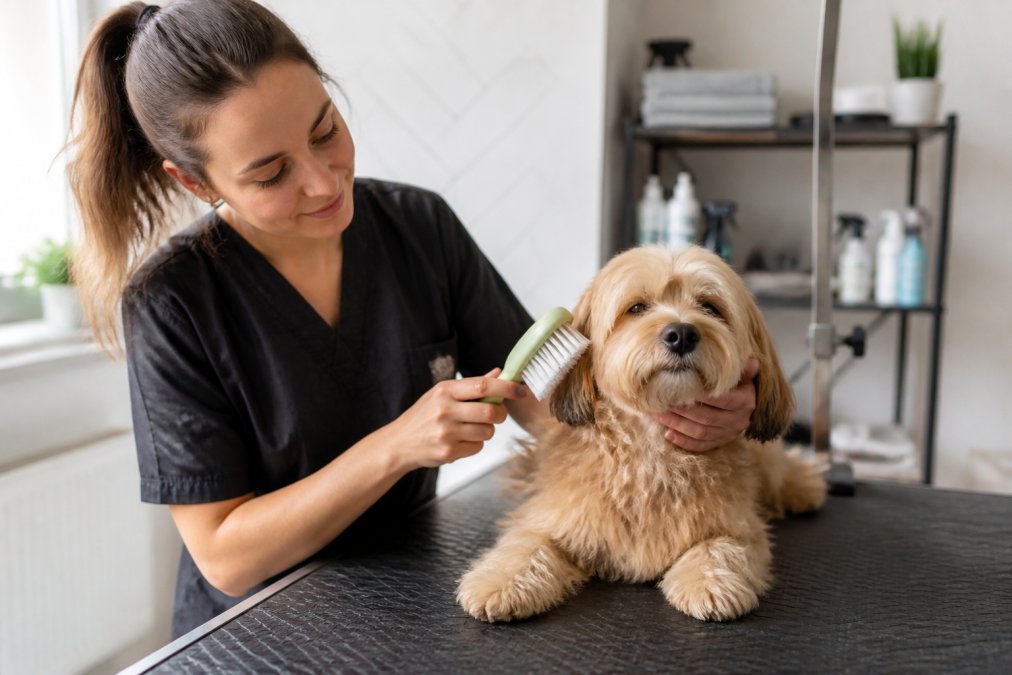
Choosing the Right Bristle Type and Pressure
Bristle type directly affects how your dog perceives grooming. Hard bristles feel sharp and uncomfortable. Soft bristles feel like a massage. The pressure you apply determines whether grooming is pleasant or painful, and anxious dogs are hypersensitive to discomfort.
Start with the lightest pressure possible. Many owners assume they need to press hard to remove tangles or shedding. You don't. Light, repeated strokes work better on sensitive skin because they don't create friction or pressure sensitivity. If your dog flinches, you're pressing too hard.
Bristle density matters too. Densely packed bristles feel different from spaced-out ones. For anxious dogs, moderate density works better than either extreme. Dense bristles can feel overwhelming; sparse bristles don't effectively remove loose hair, which frustrates both dog and owner.
Animal Hair Remover Brush Dog And Cat →
Avoiding Common Grooming Mistakes
The biggest mistake owners make is dry brushing delicate coats. Brushing dry hair increases breakage and irritation. Experts advise against this approach for sensitive skin. Instead, use a detangling spray before brushing. The spray lubricates the hair, allowing the brush to glide without pulling.
Another common error: brushing the same area repeatedly. Once you've worked through a section, move on. Repeated brushing in one spot causes irritation and teaches your dog that grooming is uncomfortable. Efficient, single-pass grooming is gentler than thorough, repetitive work.
Many owners also ignore early signs of skin irritation. If your dog scratches excessively after grooming, or if you notice redness or flaking, that's your signal to change tools or technique immediately. Continuing with methods that irritate the skin creates a cycle where grooming becomes increasingly stressful.
How to Desensitize a Dog to Grooming
If your dog already associates grooming with stress, you need to rebuild that association before you can groom effectively. Desensitization takes time, but it works.
Start by introducing grooming tools without using them. Let your dog sniff the brush, the comb, the grooming glove. Reward curiosity with treats. This removes the "unknown object" fear.
Next, touch your dog with the tool without brushing. Gently press the brush against their coat for a few seconds, then reward. Gradually increase duration. Your goal is to make the tool feel normal and safe.
Only after your dog accepts the tool's presence should you attempt actual brushing. Begin with 30 seconds of very light brushing, then stop. Reward heavily. Gradually increase duration over weeks. This slow progression prevents the re-traumatization that happens when you rush.
For anxious dogs, grooming sessions should be short and positive. Five minutes of calm brushing followed by play is better than 20 minutes of stressed grooming. Consistency matters more than duration.
Grooming Frequency and Technique for Sensitive Skin Conditions
How often you groom depends on your dog's coat type and skin condition. Dogs with sensitive skin actually benefit from more frequent, shorter grooming sessions rather than infrequent, intensive ones.
Short-haired dogs with sensitive skin need brushing 1-2 times per week. This removes loose hair and dander before they accumulate, reducing the need for aggressive brushing.
Signs of Skin Irritation and When to Consult a Veterinarian
Knowing the difference between normal grooming discomfort and actual skin damage prevents problems from escalating. Watch for these specific signs.
Gentle Grooming Tools for Different Coat Lengths
Tool selection changes based on coat structure. What works perfectly for a short-haired dog might be ineffective or even problematic for a long-haired one.
Frequently Asked Questions
What is a good gentle dog grooming brush for sensitive skin?
Brushes with rounded, coated tips and cushioned bases are ideal for sensitive dogs. Soft silicone brushes, flexible pin slicker brushes, and rubber curry brushes minimize pressure on the skin while effectively removing tangles and shedding. The Animal Hair Remover Brush with UV sterilization combines gentle grooming with hypoallergenic benefits, featuring fine and soft needle design that won't pull or tug. Stainless steel combs work well for detangling without causing irritation to the hair follicles or skin barrier.
How often should I groom a dog with sensitive skin?
Grooming frequency depends on your dog's coat type and specific skin condition. Most sensitive dogs benefit from weekly or bi-weekly grooming sessions to prevent matting and reduce dander buildup. More frequent grooming (2-3 times weekly) may be necessary for dogs with dermatological issues or fleece coats prone to tangles. Always consult your veterinarian about the appropriate grooming schedule for your dog's individual needs, as over-grooming can stress sensitive skin.
How can I desensitize my dog to grooming if they're anxious?
Start by introducing grooming tools without using them, allowing your dog to sniff and become familiar with them. Practice short, gentle sessions (5-10 minutes) using low-vibration tools that minimize stress. Reward calm behavior with treats and praise. Gradually increase session length as your dog becomes more comfortable. Use grooming sprays to facilitate detangling and reduce the need for aggressive brushing. If your dog shows signs of extreme anxiety, consult a veterinarian or professional groomer for additional guidance.
Are rubber curry brushes better for sensitive dogs than other brush types?
Rubber curry brushes are excellent for sensitive dogs because their soft rubber nubs provide gentle massage without sharp pressure points. They effectively remove loose hair, dander, and tangles while stimulating the skin and coat health. The rounded nubs won't irritate hair follicles or damage the skin barrier like stiffer bristles can. However, the best brush depends on your dog's coat texture and specific skin condition, combining a rubber curry brush with a flexible pin slicker brush or stainless steel comb often provides the most comprehensive gentle grooming routine.