

Table of Contents
- What a Minimalist Lifestyle Collection Actually Means
- How to Start a Minimalist Lifestyle Collection From Scratch
- Minimalist Capsule Wardrobe Essentials That Actually Work
- Best Minimalist Home Organization Tools for Real Spaces
- Building Intentional Shopping Habits That Stick
- Maintaining Your Collection: How to Prevent Re-Cluttering
- Conclusion
- Frequently Asked Questions
Last Updated: September 14, 2026
What a Minimalist Lifestyle Collection Actually Means
A minimalist lifestyle collection is a deliberately limited set of possessions, habits, and commitments chosen because each one earns its place in your daily life. It is not about owning as little as possible; it is about owning only what you actually use, love, and can maintain. At Prime Picks, we see this play out most clearly with busy moms and pet owners who want fewer decisions, not fewer things.
The research backs that framing. A study on minimalism as a sustainable lifestyle found that minimalist practice changes consumption behavior in measurable ways, reducing environmental impact rather than simply emptying a closet. Separately, research on the antecedents of minimalism among millennials documented how younger adults use minimalism as a psychological tool to resist consumerist pressure. The mindset shift comes first. The shelf comes second.
Aesthetic vs. Lifestyle: Getting the Mindset Shift Right
Aesthetic minimalism photographs well: white walls, three objects on a shelf, nothing out of place. Lifestyle minimalism survives a Tuesday. The distinction matters because most people quit during month two, when the photos stop and the laundry starts.
Practitioners increasingly warn against rigid codes and arbitrary rules, arguing that minimalism works better as a flexible, personal practice than a dogmatic one. That is the version worth building.
How to Start a Minimalist Lifestyle Collection From Scratch
Start with an audit, not a shopping list. Before removing anything, spend two weeks tracking what you actually touch. A documented six-month minimalist challenge using a tracking spreadsheet showed that logging usage rates of personal items produced a lasting clutter-free environment, because the data settled arguments that willpower could not.
Here is the sequence that works:
- Pick one room. Not the whole house. One room, one weekend.
- Pull everything out of one category at a time: clothes, then toiletries, then kitchen duplicates.
- Sort into four piles: keep, donate, sell, recycle. Add a fifth "decide later" box with a 30-day deadline written on it.
- Log what you keep in a simple spreadsheet or notes app.
- Store the keep pile where you will actually reach for it.
The 90-90 Rule and Other Practical Filters
The 90-90 rule asks whether you have used an item in the last 90 days or will use it in the next 90. If both answers are no, it goes. The rule is a filter, not a law, and it breaks down for seasonal gear and emergency supplies.

Three filters that hold up better in real households:
- The duplicate test: If you own two of something and only ever reach for one, the second is inventory, not backup.
- The replacement cost test: If losing it would cost under $20 to replace, storage space is worth more than the item.
- The friction test: If an item creates a chore every time you see it, it is costing you time, not saving it.
Minimalist Capsule Wardrobe Essentials That Actually Work
A capsule wardrobe is a fixed set of interchangeable garments, typically 30 to 40 pieces including shoes, that covers every occasion you actually dress for. The goal is not a smaller closet; it is zero morning decisions. Most guides stop there and hand you a piece-count table. The part they skip is the mechanism: a capsule only works when every piece can be worn with at least three other pieces in the set, and when the laundry cycle is short enough that you never run out before wash day.
The Three-Way Rule
Before a garment earns a spot, test it against three others already in the capsule. If it only pairs with one item, it is an outfit, not a wardrobe piece. This single filter eliminates most impulse buys, because trend pieces almost always fail it. A structured leather jacket passes because it layers over knits, dresses, and tees. A novelty-print blouse usually fails because it only works with one bottom.
Build Around a Base, Not a Season
Editorial trend reporting for Spring 2026 points toward quiet luxury and timeless styling, with leather jackets and structured bags named as core curated pieces rather than seasonal add-ons. The practical read: buy the categories that work across seasons, and let trend items rotate around them. A workable base for most adults looks like this:
| Category | Typical Piece Count | What Earns a Spot | What to Skip |
|---|---|---|---|
| Tops | 8-10 | Neutral knits, two dress shirts | Novelty prints |
| Bottoms | 4-5 | Dark denim, tailored trousers | Duplicate washes |
| Outerwear | 2-3 | One structured jacket, one warm layer | Trend-only cuts |
| Shoes | 3-4 | Everyday pair, one dress pair | Duplicates in near-identical colors |
| Accessories | 4-6 | One bag, one belt, two scarves | Anything needing its own outfit |
The Laundry Math Nobody Mentions
A 30-piece capsule assumes you do laundry roughly every seven to ten days. If your household runs laundry every two weeks, a 30-piece capsule will leave you short and you will re-buy what you already own. The fix is either a slightly larger capsule (40 to 45 pieces) or a shorter wash cycle. This is the single most common reason capsule wardrobes fail, and it has nothing to do with willpower.
Curating With a Non-Minimalist Partner or Kids
This is the gap most capsule guides ignore. You do not need your whole household to adopt a capsule. You need a defined boundary. A common pattern is a shared closet with a labeled section per person: your capsule occupies one rail or one shelf, and the rest of the household keeps their own system. Shared laundry, shared hangers, and shared folding are where capsules collapse, so keep your capsule on its own hangers and wash it in its own load when possible. Children's capsules work the same way at a smaller scale: 10 to 15 pieces per season, stored in a bin they can reach, with a one-in-one-out rule tied to growth spurts rather than calendar seasons.
The one drawback of the capsule approach is that it demands a real laundry routine. Skip that and you will re-buy what you already own.
Best Minimalist Home Organization Tools for Real Spaces
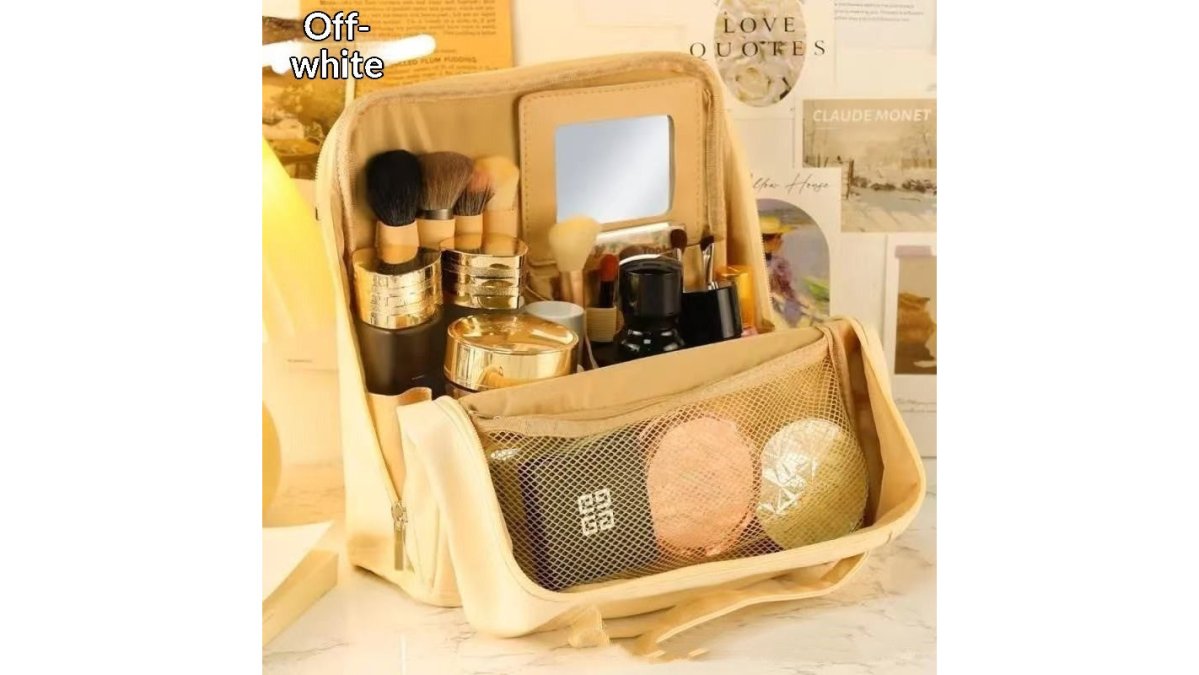
The best minimalist home organization tools are the ones that solve a specific friction point, not the ones that look best on a shelf. For small spaces, a handheld partitioned organizer with a premium portable design keeps daily essentials separated instead of loose in a drawer, and its mesh lining and collapsible build mean it stores flat when not in use. For entryways and corridors, a motion-sensor wall light removes the need for a lamp, a cord, and a free outlet, which is usually the real reason a space feels cluttered.

For small spaces, a handheld partitioned organizer with a premium portable design keeps daily essentials separated instead of loose in a drawer, and its mesh lining and collapsible build mean it stores flat when not in use. For entryways and corridors, a motion-sensor wall light removes the need for a lamp, a cord, and a free outlet, which is usually the real reason a space feels cluttered.
Building Intentional Shopping Habits That Stick
Intentional shopping habits are the rules you set before you enter a store or open an app, because decisions made in the moment almost always favor the purchase. Build your own rule set around three levers:
Build your own rule set around three levers:
- A 72-hour wait on any non-essential purchase over $50.
- A named problem category, tracked monthly. Most people have one: candles, mugs, pet toys, phone cases.
- A one-in, one-out ledger for anything that occupies storage.
Then automate the rest. Autopay on fixed bills and a separate sinking fund for replacements remove the monthly negotiation entirely.
Maintaining Your Collection: How to Prevent Re-Cluttering
Re-cluttering is the predictable result of a system with no intake controls and no exit plan. Every curated collection has two valves: what comes in and what goes out. If you only manage one, the collection grows. Track both.
The Intake-and-Exit Framework
Every curated collection has two valves: what comes in and what goes out. If you only manage one, the collection grows. Track both.
- Run a 15-minute weekly reset: one drawer, one surface, one bag.
- Do a 30-minute monthly audit of your named problem category.
- Review the "decide later" box on its written deadline.
- Re-check the 90-90 rule at each season change.
- Recycle or donate before buying anything new in that category.
Sustainable Disposal: Where Things Actually Go
This is the step most minimalist guides skip, and it is the one that keeps a purge from becoming landfill. Before you bag anything, sort by destination, not by category:
- Wearable clothing and shoes: Donate to a local charity thrift store or a verified clothing-recycling program. Most national thrift chains accept clean, wearable items; call ahead for current intake rules, since many paused textile intake at various points in recent years.
- Stained, torn, or single shoes: Textile recycling bins, not donation. Many municipalities and retailers run textile drop-off programs; check your city's waste department page for the nearest bin.
- Electronics: Retailer take-back programs and municipal e-waste events accept phones, cables, and small appliances. Do not put them in curbside recycling.
- Furniture and large items: Free listing platforms and local buy-nothing groups move items faster than donation drop-offs, which often refuse large pieces.
- Books: Little free libraries, school libraries, and used-book buyers. Public libraries generally do not accept donated books for their own shelves.
- Hazardous items (paint, batteries, chemicals): Municipal household hazardous waste days only. Never curbside.
A simple rule: if you would not give it to a friend, do not donate it. Donation is not a landfill alternative.
Shared Spaces and Non-Minimalist Households
Households with children or a non-minimalist partner need one extra step: a shared bin per person, not per room. Shared spaces fail when the system requires each family member to interpret it differently. Give each person a labeled bin they own, and let the shared surfaces stay neutral. The maintenance cadence then applies to shared surfaces only, while each person manages their own bin on their own schedule.
Conclusion
The hard part of a minimalist lifestyle collection is not the first purge; it is month seven, when nothing feels new and the sales start again. Prime Picks curates the pieces that survive that test, from portable organizers that keep daily essentials separated and collapsible storage that disappears when unused, to motion-sensor lighting that removes cords and clutter from entryways. Our collection is built for busy moms and pet owners who want fewer decisions, not fewer things. Get started with Prime Picks and build a collection you can actually maintain.
Frequently Asked Questions
How do you start a minimalist lifestyle collection from scratch?
Start with a lifestyle audit: walk through each room and note what you actually use weekly. Apply the 90-90 rule, which asks whether you have used an item in the last 90 days or will use it in the next 90. Items that fail both tests are candidates for removal. Begin with one category, such as clothing or kitchen tools, rather than tackling your whole home at once. This keeps the process manageable and builds momentum for the next area.
What are the 33 items in a minimalist wardrobe?
The 33-item wardrobe is a framework popularized by minimalist fashion communities. It typically includes tops, bottoms, outerwear, shoes, and accessories that mix and match across seasons. Exact counts vary by climate and lifestyle. The goal is not the number itself but the curation: every piece should work with at least three other items. A capsule wardrobe built this way reduces decision fatigue and supports intentional shopping habits because you stop buying duplicates.
How does a minimalist collection differ from simply owning less?
Owning less is a result; a minimalist collection is a system. Research from ScienceDirect (2021) frames minimalism as a sustainable lifestyle choice that changes consumption behavior, not just a decluttering exercise. A curated collection has clear criteria for what enters and stays, such as durability, multi-purpose use, and personal value. Without those rules, you can own few items and still feel disorganized. The distinction matters because curation prevents re-cluttering.
What criteria should I use to keep or discard items in my collection?
Use four filters: frequency of use, condition, whether it serves a current need, and whether it brings genuine value. The 90-90 rule handles frequency. For condition, discard anything damaged beyond easy repair. For need, ask if you would buy it again today at full price. For value, consider whether it supports your daily routine or just occupies space. Applying all four filters consistently makes decisions faster and reduces second-guessing.
Do people with ADHD like minimalism?
Many people with ADHD find minimalist systems helpful because fewer items mean fewer visual distractions and less decision fatigue. The key is adapting the approach: rigid rules can feel overwhelming, so flexible frameworks work better. Scheduled 15-minute weekly clutter checks suit shorter attention spans better than marathon decluttering sessions. The goal is a system that reduces friction in your daily routine, not one that adds another task to manage.
How do I maintain a minimalist collection without re-cluttering?
Maintenance beats occasional purges. Scheduling 15-minute weekly clutter checks instead of massive, infrequent decluttering sessions can be effective. Use vertical wall storage for daily-use items so surfaces stay clear. Track 'problem categories' where items accumulate fastest, such as mail, kitchen gadgets, or accessories. The habit of regular small reviews prevents the slow buildup that leads to another major purge.